Shanghai Mahjongg
- 4.8
- Rating
- 1.00M
- Installs
- Free
- Price
 Analysis by App-foxy
I found Shanghai Mahjongg easy to understand within a few minutes, but its appeal is not just that it presents a familiar board-game format. The real question is how comfortably it works for different players, in different surroundings, and with different levels of patience or visual confidence. As a free board game from UniRise Studio, it offers a straightforward way to play Mahjong Solitaire on a phone or tablet, while its limitations become more noticeable when the screen, surroundings, or player needs are less than ideal.
I approached it as the kind of game someone might open during a quiet break, while waiting for an appointment, or at home when they want something thoughtful without the pressure of a timer-heavy action game. The experience is generally calm and self-contained. You match exposed tiles, gradually clear the layout, and keep checking which move will preserve your options. That simple loop makes it approachable, although it also means the quality of the visual presentation matters a great deal.
How the board reads and how easily I could navigate it
The first strength is the familiar structure. Anyone who has played a traditional Mahjong Solitaire arrangement will recognize the basic goal: remove matching tiles while respecting which pieces are available. I did not need a long tutorial to understand what the board expected from me. That matters for casual players, older users, and anyone who prefers learning by doing rather than reading instructions before starting.
You May Also Like

 Blood Strike: 2.5 Anniversary
Blood Strike’s Loadouts Turn Every Drop Into a Tactical Gamble
A close look at Blood Strike’s custom loadouts: how fast access to signature weapons reshapes its battle royale rhythm, rewards preparation, and narrows the gap between fights.

 Pandora - Music & Podcasts
Pandora’s Music Is Easy to Start, but Harder to Recover
Pandora’s strength is its low-effort path from a seed to a station. Its weak spot is how much confidence it asks you to place in connection, setup, and quiet recovery.

 8 Ball Pool
 Is Built on Rivalries, Rematches, and Routine
A close look at the rivalries, rematches, shared routines, and unanswered safety questions that turn a quick pool match into a persistent mobile community.

 Samsung Music
’s Quiet Strength Is Playing What You Already Own
Its reach comes less from spectacle than from dependable access to a personal library. That simplicity is both the app’s strongest retention engine and its ceiling.

 AccuWeather: Weather Radar
AccuWeather Review: A Quick, Clear Forecast for Everyday Decisions
For everyday plans, the best forecast is the one you can understand quickly. AccuWeather makes rain timing, radar, and local conditions easy to act on, with a few trade-offs.

 Hill Climb Racing
Why Hill Climb Racing Still Turns Crashes Into One More Run
A tiny car, a bumpy hill and one more upgrade: Hill Climb Racing keeps resurfacing because its simple chaos makes every near-miss feel personal.
More From Our News Desk



The game is listed in the board category and carries an Everyone content rating, which fits the nonviolent, puzzle-focused nature of the experience. There is no complicated story to follow and no large collection of systems to memorize. I could concentrate on the layout itself instead of navigating menus, characters, equipment, or a long progression tree.
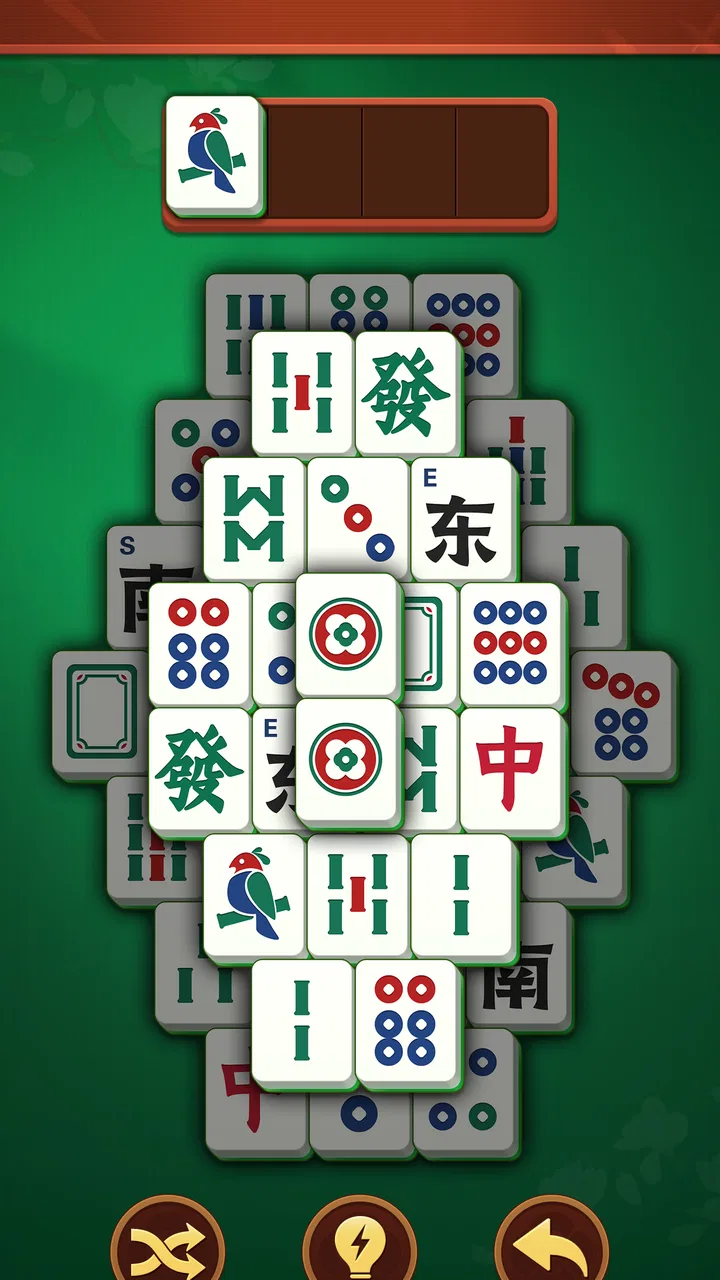
That simplicity is useful, but it also creates a particular accessibility trade-off. In a Mahjong Solitaire game, the tiles are the interface. Their symbols, outlines, colors, and position in the stack all carry information. If I am playing on a small phone, the upper layers can make the lower pieces harder to inspect, especially when several similar designs are close together. A larger tablet screen is naturally more comfortable for this kind of board because it gives each tile more breathing room without requiring me to constantly zoom mentally into the display.
My practical advice is to hold the device at a stable distance and avoid starting a difficult layout when the screen is catching glare. A bright reflection can make a tile face look less distinct, and that is more damaging here than in a game with large buttons or text prompts. If you are choosing between a phone and a tablet, I would use the tablet for longer sessions and keep the phone for short, familiar puzzles.
The board also rewards deliberate scanning. I found it helpful to inspect the outside edges first, then look for pairs that are currently exposed rather than immediately selecting the first matching symbols I noticed. This is not merely a strategy tip. It reduces unnecessary visual searching and makes the game less tiring for players who find dense arrangements difficult to process. A slow, repeatable scan is easier on attention than jumping randomly around the board.
Navigation feels most comfortable for people who want a focused game rather than a feature-rich platform. The limited premise is a benefit if you dislike clutter, but it may feel bare to players who expect extensive customization, social play, or a large set of guided modes. Compared with a digital card game, there is less text and less menu management. Compared with a physical Mahjong Solitaire book, the digital version is more convenient to carry, though it cannot match the tactile certainty of moving real pieces with your hands.
Visual clarity matters more than the store summary suggests
The short description presents the game as Shanghai Mahjongg, but that phrase does not tell me how demanding a particular board can feel. The challenge is not only finding matching symbols. It is also distinguishing them while tracking which tiles are blocked, partly covered, or newly revealed. I recommend playing with the device clean and the display set to a comfortable brightness rather than assuming the brightest setting is always best.
Players who have difficulty distinguishing small decorative details should take a cautious approach. The game may be enjoyable when the symbols are familiar and the board is uncluttered, but a crowded arrangement can turn a relaxing puzzle into a visual matching test. I would not choose it as my first recommendation for someone who needs very large, high-contrast controls or strong text-scaling support. A simpler matching game with oversized shapes may be a better fit in that situation.
One useful habit is to pause after every few removals and re-read the whole board. Newly exposed tiles change the available choices, and this brief reset prevents me from relying on a memory of the old layout. It is especially helpful for players who lose their place when several visual elements change at once. Rather than trying to remember every tile, I treat each reveal as a fresh, smaller puzzle.
Motor comfort, sensory load, and different ways of playing
From a motor perspective, this is a relatively gentle type of game. It does not demand rapid swipes, repeated tapping, or precise timing under pressure. I can choose a tile, think, and then choose its match. That makes the basic interaction more suitable for players who prefer slower input or who find fast arcade controls uncomfortable.
Still, “slow” does not mean effortless for every hand. A small tile can require more accuracy than a large button, particularly when several pieces are close together. Players with tremors, reduced fine-motor control, or difficulty holding a phone steady may find a tablet easier simply because the board has more physical space. A stable surface can also help: resting the device instead of holding it in one hand reduces accidental movement and leaves the other hand free for careful taps.
I also found that the game’s mental workload changes depending on how I play. If I rush to remove any obvious pair, I create more chances to block useful pieces later. If I take a few seconds to compare the available options, the experience becomes more thoughtful and less frustrating. That makes it a good match for someone who wants a quiet concentration exercise, but not necessarily for a person looking for a completely passive way to relax.
Sensory comfort is more complicated. Board games of this kind are visually dependent, so players with low vision, color-perception differences, or sensitivity to busy patterns may need to judge the tile presentation for themselves. I would test a short session before committing to long play. If symbols begin to blur together, the problem is not the difficulty of the puzzle alone; it is that the main information channel is becoming tiring.
For players who are sensitive to sound, the safest approach is to begin with the device volume low and adjust only if needed. I would not rely on audio as the main way to understand the board. The puzzle is fundamentally visual, so someone who cannot comfortably inspect the tile faces may not get the same benefit from the otherwise simple controls.
There is also a useful social angle. Although I play it alone, it can work as a shared, low-pressure activity. One person can hold the device while another suggests a move, or two family members can discuss which pair should be removed next. That approach helps someone who enjoys the reasoning but struggles with tapping a small target. It also turns the game into a conversation rather than a solitary test of speed.
A practical routine for longer sessions
When I want to play for more than a few minutes, I use a simple routine: place the device on a stand or table, scan the outermost available tiles, identify pairs that appear in multiple places, and only then start removing pieces. After each important reveal, I stop and reassess. This reduces frantic tapping and makes it easier to notice when I am about to eliminate a useful option too early.
This routine is particularly valuable for people with attention difficulties. The board can be divided into small zones, such as the left side, center, and right side, so the eyes do not wander across the entire arrangement repeatedly. I do not need to memorize every symbol. I only need to finish one visual area, then move to the next. That is a small change, but it makes the game feel more manageable.
The trade-off is that this method removes some of the casual immediacy. Someone who wants to tap quickly and let the game carry the rhythm may find the deliberate approach too serious. For me, that is part of the appeal, but it is not universal. The game suits reflective play better than restless, high-energy sessions.
Where it fits into everyday life
I can imagine opening Shanghai Mahjongg during a commute when I have a seat, during a short break between tasks, or in the evening when I want a puzzle that does not require learning a new fictional world. A realistic use case would be a ten-minute waiting period: I start a board, make a few careful matches, and put the phone away when my appointment is called. The format works well for that kind of interruption because the central action is easy to resume mentally.
For longer sessions, the game is better suited to a quiet room than to a noisy café or a brightly lit outdoor setting. Background movement, glare, and interruptions all make it harder to track the layered board. If you are playing while someone is talking to you, you may miss a newly exposed pair or forget which tiles you were comparing. The game is not demanding in the usual action-game sense, but it does ask for sustained visual attention.
The free price makes it easy to try without a purchase decision at the start. In-app purchases are listed at $5.99 per item, so I would pay attention to any purchase prompt and decide in advance whether optional extras are worthwhile for my style of play. For a casual user, the best approach is to enjoy the basic game first and only consider spending if the added content genuinely improves the way they use it. I would not treat the purchase option as necessary for discovering whether the core puzzle suits me.
Its technical reach is also broad. The game requires Android 7.0 or later, which means many older Android devices can potentially run it. That is helpful for families sharing an older phone or for players who do not upgrade frequently. Even so, an older device with a small or dim display may be less comfortable than a newer one, so operating-system compatibility should not be confused with ideal readability.
The current version is 2.26.0, and the game has already attracted more than one million installs. Its average rating is 4.9 from roughly eighteen thousand ratings, with about three thousand reviews. Those figures suggest that the straightforward format resonates with a large audience, although popularity cannot tell me whether the visual design will work for a particular player. I would still judge it by the screen size, symbols, and interaction comfort that matter in actual use.
What may still get in the way
The largest remaining barrier is the dependence on visual detail. A player may understand the rules perfectly and still struggle because the symbols are too small, the board is too dense, or the device environment is uncomfortable. This is where a physical matching game with large printed pieces, or a digital puzzle built around oversized shapes, could be a better choice.
Another limitation is the narrowness of the experience. If you want online opponents, a story campaign, spoken guidance, or a strong collection of accessibility controls, this is probably not the right destination. Its strength comes from keeping the activity close to classic tile matching. That focus is welcome for me, but it leaves less room for alternative ways to engage.
Players who need frequent movement may also find the board less suitable than an action game with short, varied tasks. Although the taps are gentle, the eyes remain fixed on a layered arrangement for much of the session. I would take regular breaks rather than playing continuously, especially if the symbols start to look similar or I notice myself leaning toward the screen.
There is a strategic barrier as well. Beginners can remove obvious pairs and feel successful at first, then reach a position where earlier choices have left fewer options. That is not a flaw in the genre, but it can feel confusing if the player expects every visible pair to be equally safe. My recommendation is to look for duplicate pairs and consider which removal exposes the most useful space before committing. The goal is not simply to match; it is to preserve flexibility.
That distinction also explains why it may not suit young children who want immediate cause-and-effect play. The Everyone rating makes the subject matter broadly approachable, but the reasoning can be more demanding than a basic shape-matching game. A child may enjoy it with an adult nearby, especially if the adult talks through the choices, while a child seeking rapid rewards may lose interest.
Who should choose it, and who should look elsewhere
I would recommend it to adults who enjoy traditional solitaire puzzles, people who want a quiet board game for short breaks, and players who prefer thinking time over reflexes. It is also a reasonable option for someone moving from physical tile puzzles to a portable digital format. The uncomplicated rule set means I can hand it to a relative and explain the goal without a long setup.
I would be more cautious recommending it to anyone who needs very large visual targets, nonvisual play, extensive customization, or a game that remains comfortable in poor lighting and noisy surroundings. Those players may be happier with a puzzle designed around accessibility from the ground up rather than one whose main challenge is examining layered tile faces.
Compared with a physical Mahjong Solitaire set, the app wins on portability and quick setup, but loses the tactile feedback of lifting and arranging pieces. Compared with a generic matching game, it offers more planning because tile availability and stacking affect every decision. Compared with a competitive board-game app, it is calmer and less socially demanding, but also less varied if you want opponents or a broader ruleset.
One of my favorite ways to use it is as a short attention reset. I do not begin with the intention of finishing a large session. I simply solve a few safe pairs, reassess the layout, and stop when my focus returns. That makes the game more useful than its simple premise might suggest. It can occupy the mind without asking me to follow a plot, manage resources, or react quickly.
At the same time, I would not mistake calmness for universal comfort. The game is inclusive in its low-speed interaction and familiar rules, but its visual dependence remains significant. A player should test the board in their normal environment, not only in a bright, quiet room where every tile looks clear. That small trial will answer more than a general rating can.
My inclusive verdict after playing
Shanghai Mahjongg is a focused, free board game that does its best work when I want a traditional tile puzzle without unnecessary complexity. UniRise Studio has chosen a format that is easy to explain, gentle on reaction time, and suitable for short or thoughtful sessions. The broad age rating, older Android support, and large install base make it approachable for many people, while the high average rating reflects how well the core idea connects with its audience.
Its strongest inclusive quality is the freedom to think before tapping. Players do not need quick reflexes to participate, and a friend or family member can help with decisions if tapping or visual scanning is difficult. The board can also become a useful concentration exercise when approached in zones and with regular pauses rather than rushed matching.
Its clearest weakness is equally important: the experience depends heavily on seeing small, layered tile designs comfortably. Screen size, glare, lighting, hand stability, and visual fatigue can change the experience considerably. I would choose a tablet or a supported device with a comfortable display for longer play, and I would look elsewhere if I needed strong nonvisual support or very large, high-contrast controls.
My final recommendation is therefore positive but specific. If you want a calm Mahjong Solitaire game for Android, enjoy planning more than speed, and can read a dense tile board without strain, this is an easy one to try. If your priority is extensive accessibility customization, tactile play, online competition, or constant variety, another option may serve you better. For the right player, though, its uncomplicated design is exactly what makes it welcoming: open it, study the board, make a careful match, and let the puzzle set the pace.
FAQs for Shanghai Mahjongg
01What is Shanghai Mahjongg, and how does it differ from traditional Mahjong?
Shanghai Mahjongg is a digital version of the classic tile-matching game, adapted for mobile devices. Unlike traditional Mahjong, which is a four-player game involving strategy and skill, Shanghai Mahjongg focuses on solitaire-style gameplay where the objective is to match identical tiles to clear the board. This version is perfect for solo players looking for a relaxing yet challenging experience.
02Is Shanghai Mahjongg suitable for beginners, or should I have prior experience with Mahjong?
Shanghai Mahjongg is designed for both beginners and experienced players. The app typically includes tutorials and progressive difficulty levels to help new players learn the basics and improve their skills. Experienced players will appreciate the strategic depth and variety of puzzles available, making it an engaging choice for all skill levels.
03What features does Shanghai Mahjongg offer to enhance the gaming experience?
Shanghai Mahjongg often includes a variety of features such as multiple tile sets, backgrounds, and game modes to customize your experience. Some versions may offer daily challenges, leaderboards, and achievements to keep players engaged. Additionally, features like hints and undo options make the game accessible and enjoyable for everyone.
04Does Shanghai Mahjongg require an internet connection to play?
Most versions of Shanghai Mahjongg do not require an internet connection, making it ideal for offline play. However, features like leaderboards, daily challenges, or cloud saves might need connectivity. Always check the specific requirements of the version you are downloading to ensure it meets your needs, especially if you plan to play on-the-go.
05Are there any in-app purchases or ads in Shanghai Mahjongg?
Many versions of Shanghai Mahjongg are free to download but may include in-app purchases or ads to support development. In-app purchases typically offer ad-free experiences, additional tile sets, or other features. Always review the app details and user reviews to understand any costs involved before downloading.
Pros
- Beautiful
- detailed graphics enhance gameplay.
- Intuitive controls for easy tile matching.
- Multiple difficulty levels for all skill ranges.
- Daily challenges keep the game engaging.
- Relaxing soundtrack complements the experience.
Cons
- Ads can be intrusive during gameplay.
- Limited tile set options available.
- Occasional lag on older devices.
- No multiplayer mode for competitive play.
- In-app purchases can be pricey.

Shanghai Mahjongg
Gallery